
10 Common Web Hosting Problems (And How to Fix Them)
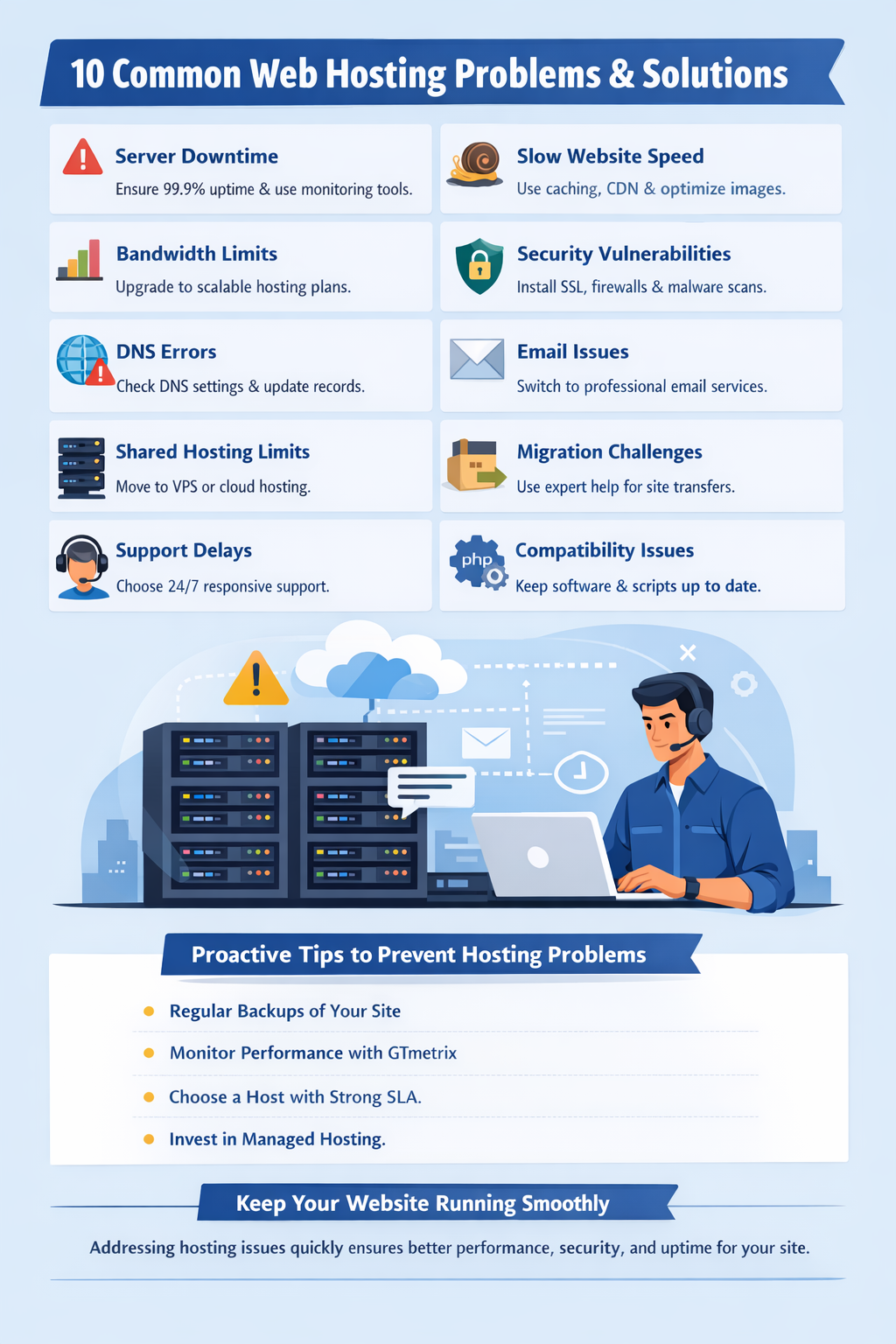
Running a website means relying heavily on your web hosting provider. Even with a good hosting plan, issues can still appear — from slow loading speeds to unexpected downtime.
The good news? Most web hosting problems are common, predictable, and easy to fix if you know what to look for.
In this complete guide, we’ll cover the 10 most common hosting problems, their real causes, and practical solutions to keep your website fast, secure, and always online.
1. Server Downtime
Server downtime is one of the most damaging hosting problems. When your website is offline, visitors can’t access your content, sales stop, and your brand credibility suffers. Search engines also penalize unstable websites.
Solution:
Choose a hosting provider that guarantees at least 99.9% uptime. Use monitoring tools like UptimeRobot or Pingdom to track availability. For critical websites, consider VPS or dedicated hosting, which offers much better reliability than shared servers.
Regular backups are essential so your site can be restored instantly if something goes wrong.
2. Slow Website Speed
A slow website frustrates visitors and increases bounce rates. Google also ranks slow sites lower, directly affecting SEO and conversions.
Solution:
Enable caching, compress images, and use a Content Delivery Network (CDN). Minify CSS and JavaScript files and avoid heavy plugins.
If performance is still poor, upgrade from shared hosting to cloud or VPS hosting for dedicated resources.
3. Bandwidth Limits
Some hosting plans restrict bandwidth. During traffic spikes — sales campaigns, viral posts, or promotions — your site may slow down or even go offline.
Solution:
Choose a scalable hosting plan that grows with your traffic. Cloud hosting is ideal because it automatically adjusts resources based on demand.
4. Security Vulnerabilities
Security remains one of the biggest concerns in web hosting. Weak servers can expose your site to hacking, malware, data theft, and DDoS attacks.
Solution:
Install an SSL certificate, use firewalls, enable malware scanning, and keep your CMS and plugins updated. Choose a hosting provider that offers daily security monitoring and automatic backups.
Two-factor authentication for admin accounts is highly recommended.
5. DNS Errors
DNS issues prevent visitors from reaching your website and usually result from incorrect records or domain configuration problems.
Solution:
Double-check DNS records in your control panel. Use reliable DNS services like Cloudflare or Google DNS for faster resolution. Your hosting provider should also verify and optimize DNS settings.
6. Email Hosting Problems
Email issues like bounced messages, spam blacklisting, or delayed delivery can damage business communication.
Solution:
Use professional email services like Google Workspace or Microsoft 365. If using hosting-based email, configure SPF, DKIM, and DMARC properly to improve deliverability and trust.
Shared hosting is cheap, but resources are split between many websites. One heavy site can slow down everyone else.
Solution:
As your site grows, move to VPS or cloud hosting. You’ll get dedicated CPU, RAM, and storage — and far better performance.
8. Hosting Migration Problems
Switching hosting providers often causes downtime, broken links, or lost data.
Solution:
Always create a full backup before migration. Use professional migration tools or let your new host handle it. Test everything after migration — pages, forms, databases, and emails.
9. Poor Technical Support
When something breaks, slow support can cost you money and reputation.
Solution:
Choose a host that offers 24/7 live support via chat, phone, and email. Real humans — not just ticket systems.
10. Software Compatibility Issues
Outdated server software (PHP, MySQL, Node, etc.) can break your site or cause errors.
Solution:
Choose a host that supports the latest software versions and allows easy upgrades. Always test updates on staging before going live.
Other Hosting Problems to Watch For
-
Weak backup policies
-
No free SSL certificates
-
Poor scalability
-
Complicated control panels
-
Hidden limits in “unlimited” plans
Pro Tips to Prevent Hosting Problems
You can avoid 90% of hosting issues by following these simple rules:
-
Choose a host with a clear SLA (Service Level Agreement)
-
Back up your site regularly
-
Monitor speed with GTmetrix or PageSpeed Insights
-
Use managed hosting if you’re not technical
-
Set uptime alerts
Final Thoughts
Every website owner faces hosting problems at some point. The difference between struggling and succeeding is choosing the right hosting partner.
A good hosting provider doesn’t just sell space — they provide:
-
Performance
-
Security
-
Scalability
-
Real technical support
With the right setup, your website will stay fast, secure, and online 24/7.
SEO Meta (you can paste into Yoast / RankMath)
SEO Title:
10 Common Web Hosting Problems and How to Fix Them (2026 Guide)
Meta Description:
Discover the most common web hosting problems and proven solutions. Learn how to fix slow speed, downtime, security issues, DNS errors, and more.
Primary Keywords:
web hosting problems, hosting issues, server downtime, slow website, hosting solutions, VPS hosting, cloud hosting
Image (already generated)
Use this as your featured image and also inside the article:
Alt text (important for SEO):10 common web hosting problems and solutions infographic